

12 products
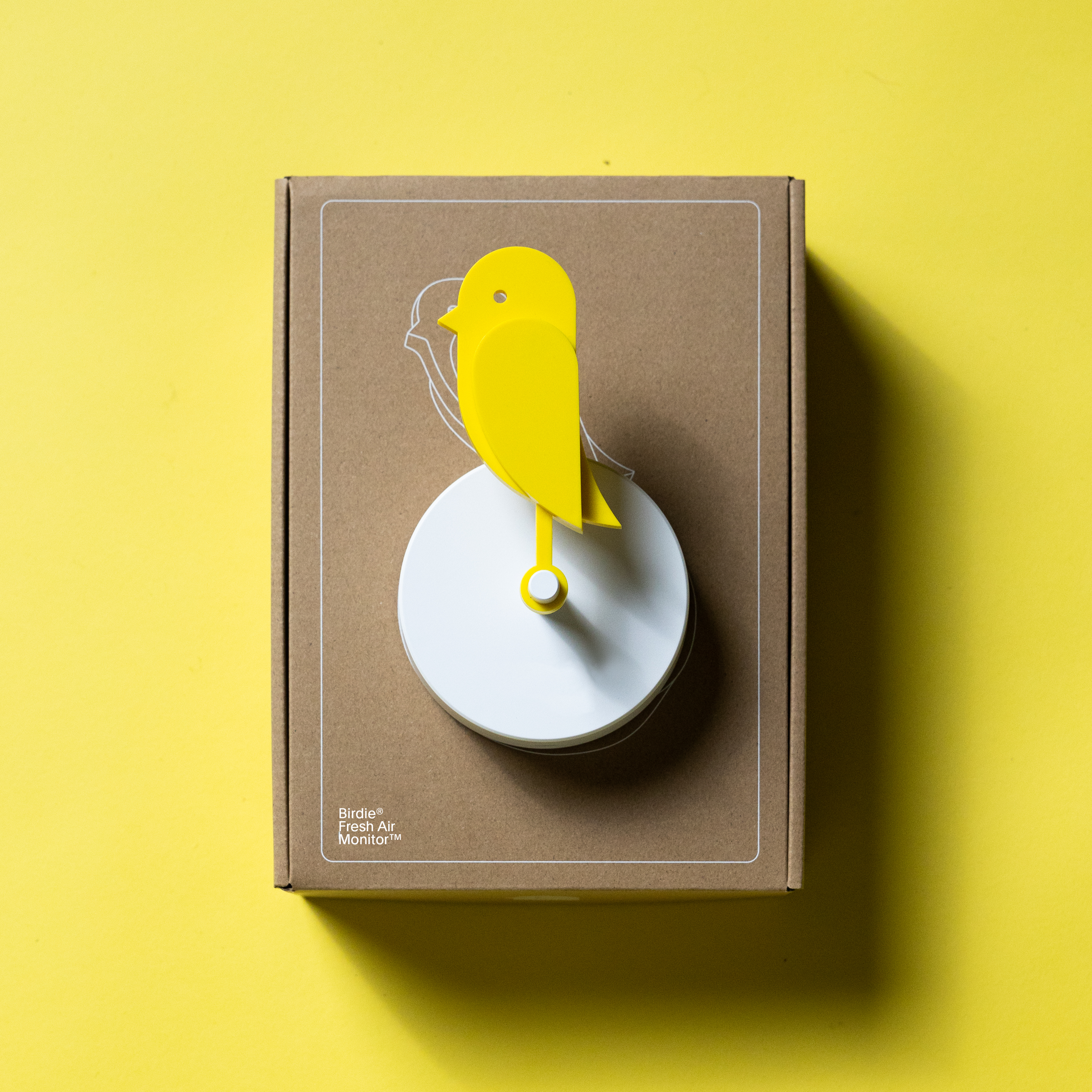
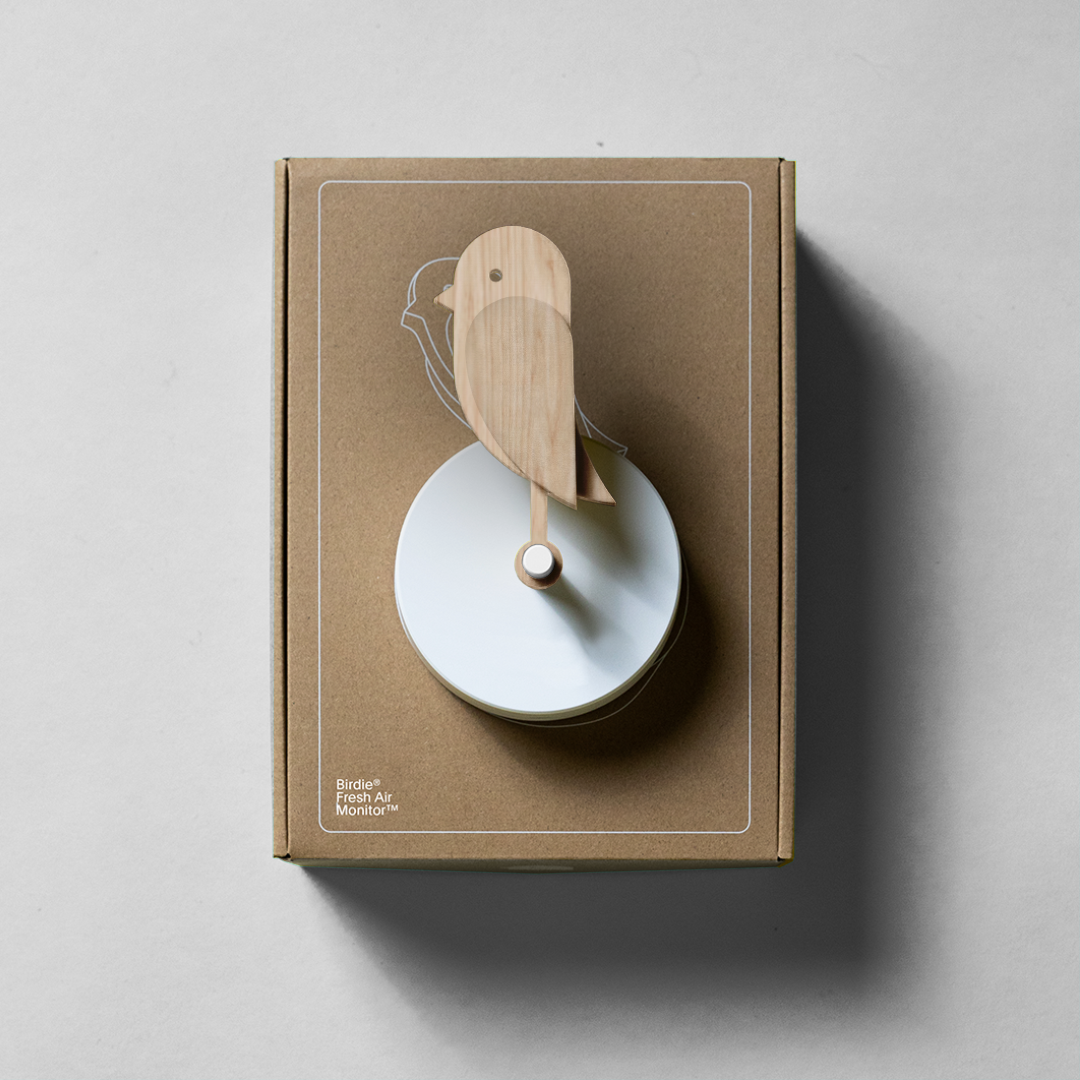
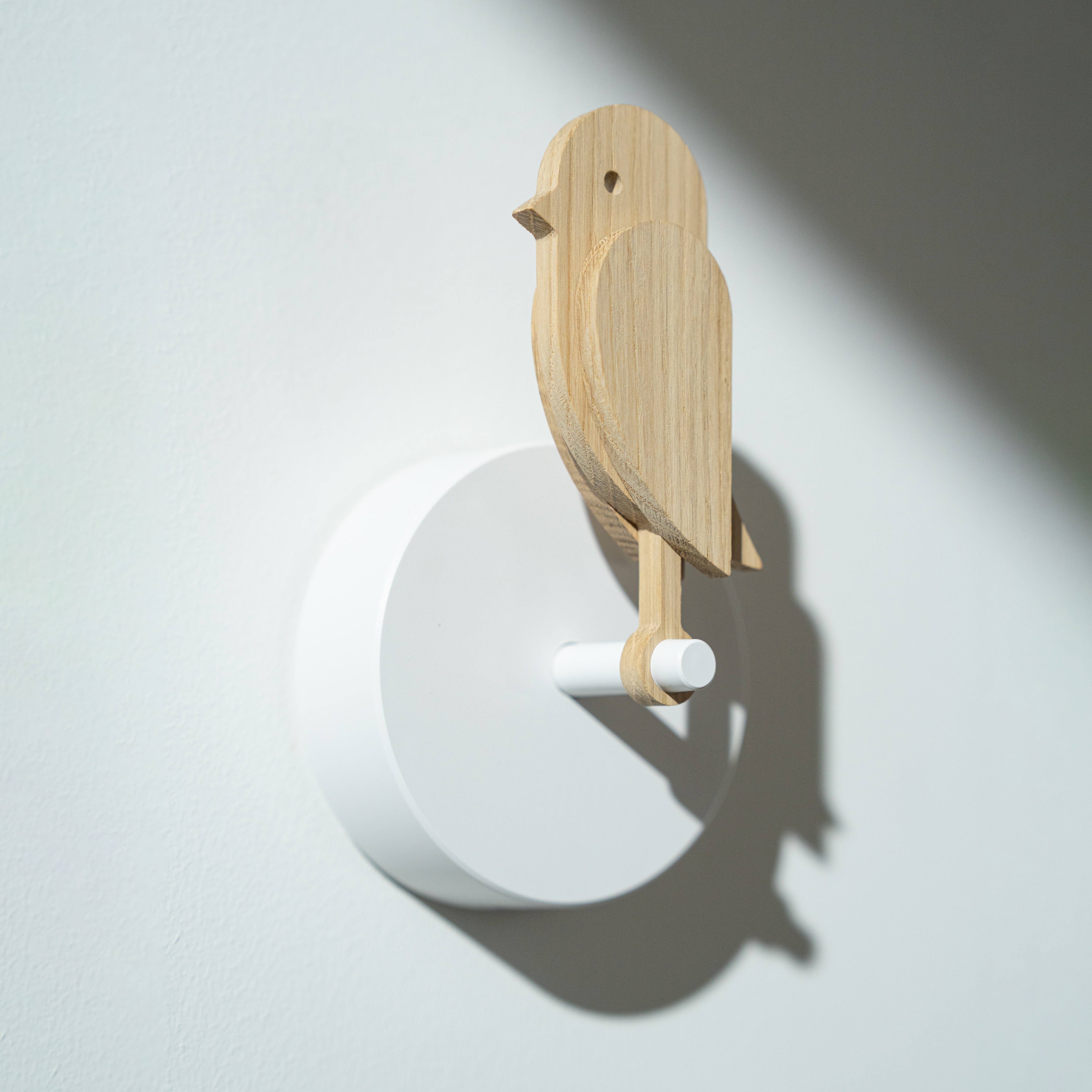
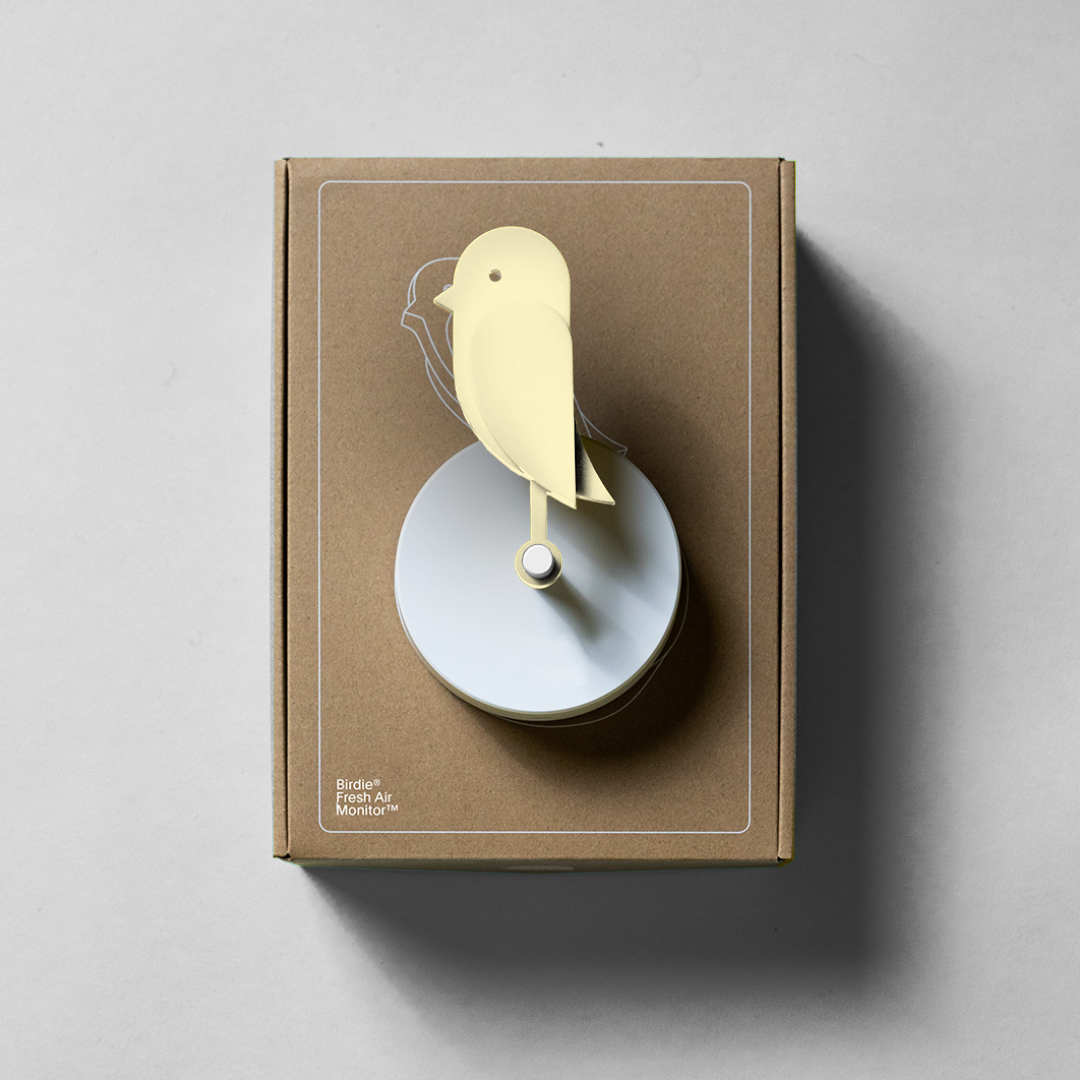




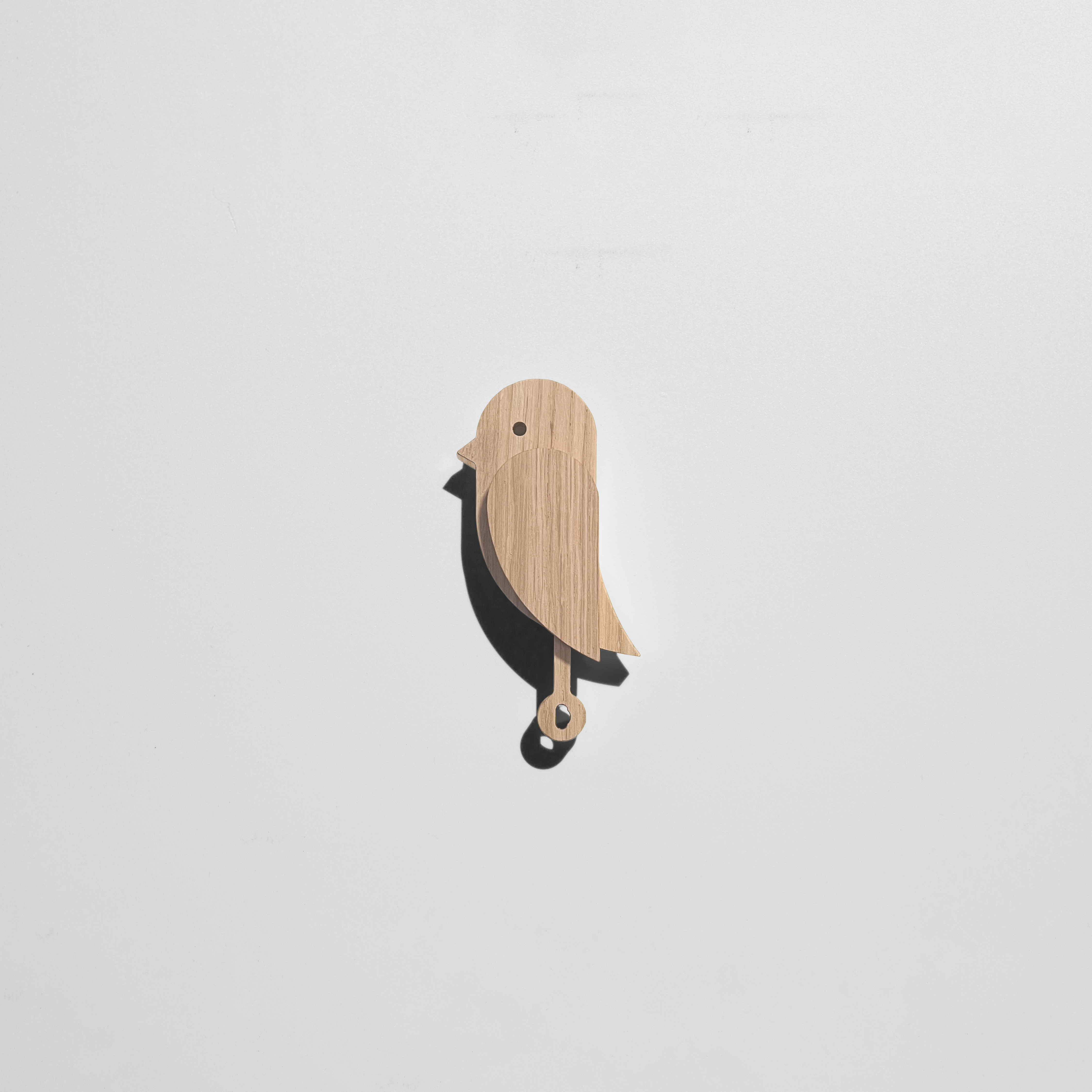



Smart indoor air quality monitor for a healthier home
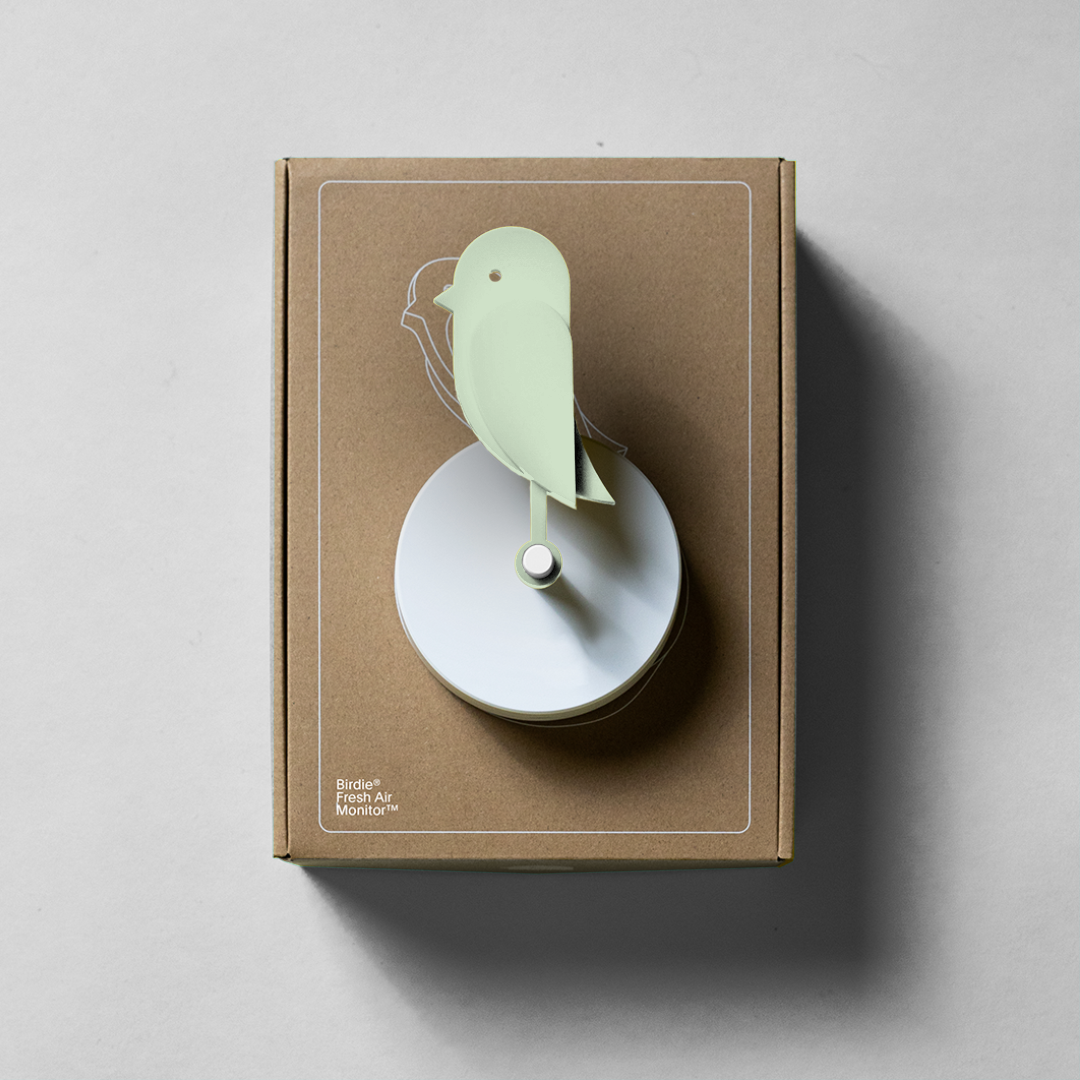
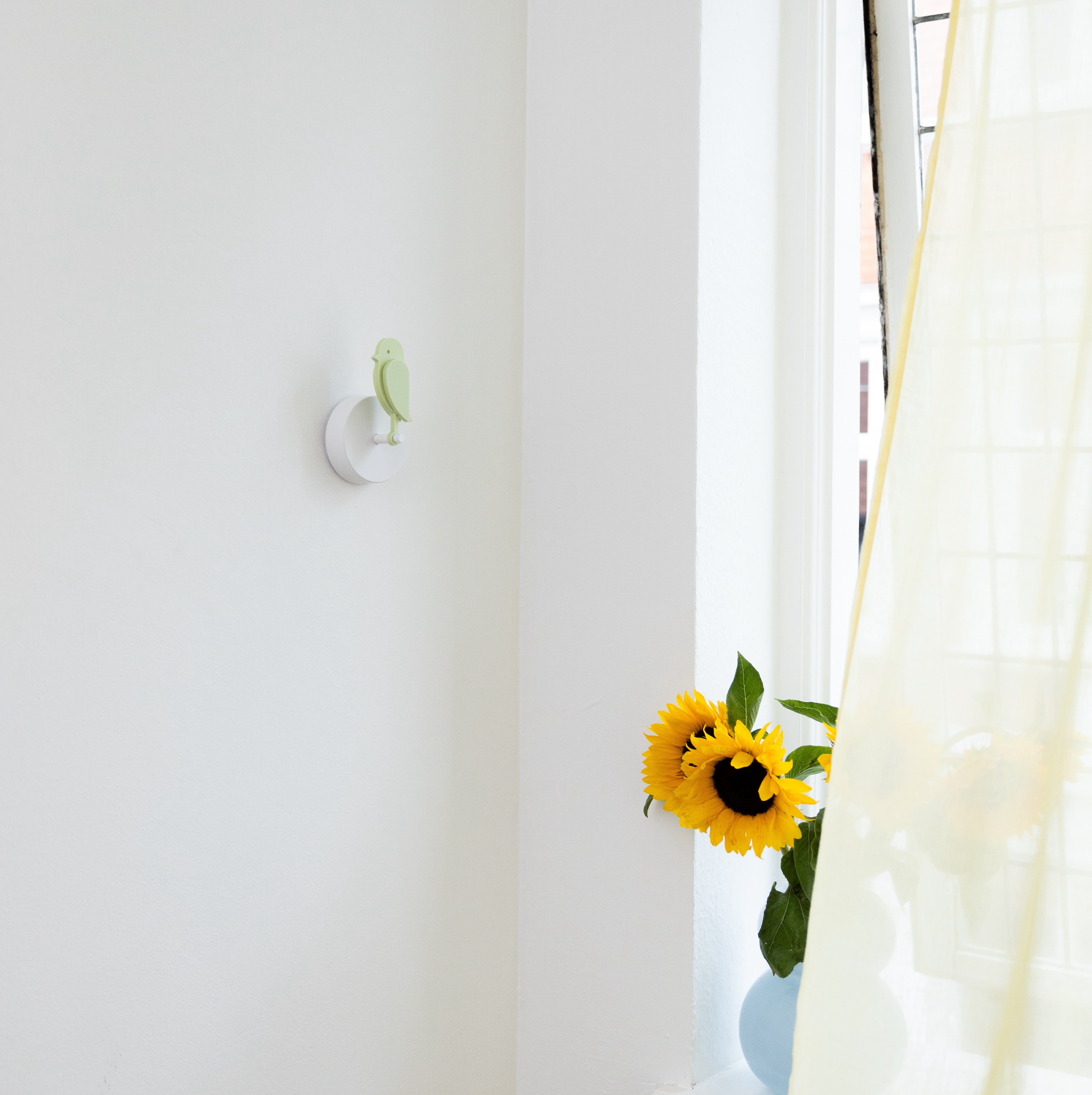
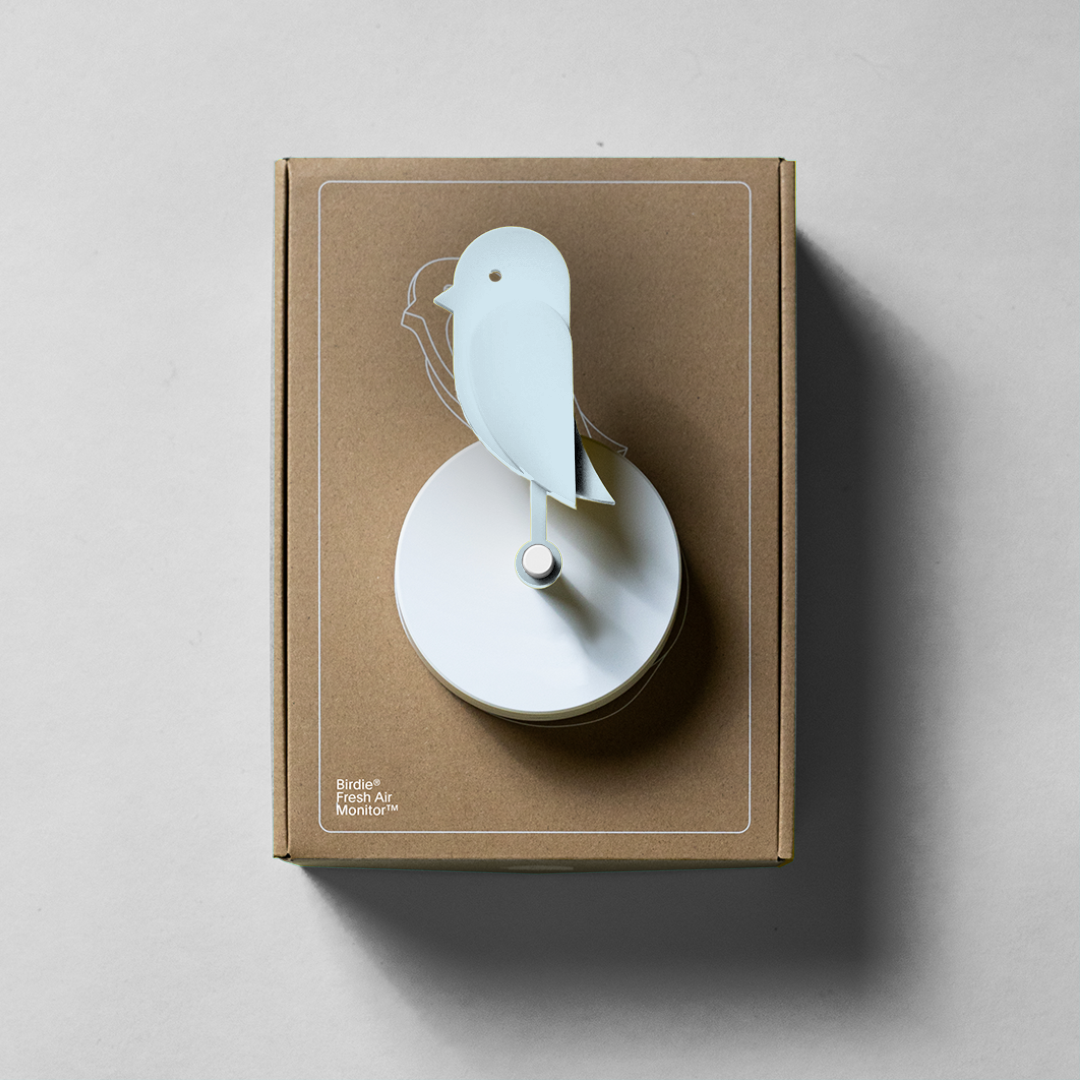
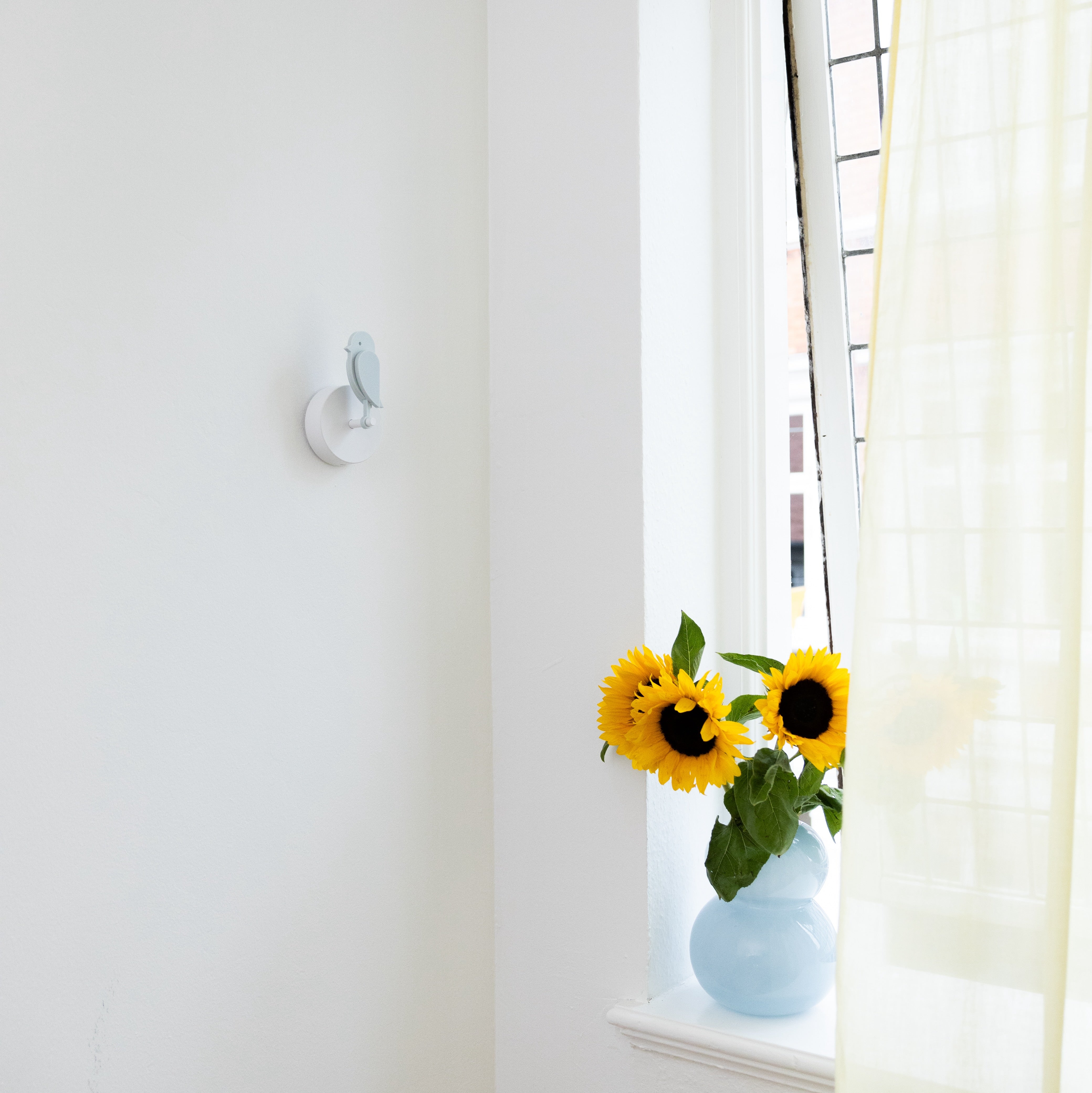
Discover Birdie - a visual and intuitive air quality monitor that transforms how you understand indoor air. Designed for simplicity, elegance, and immediate feedback, Birdie helps you tackle poor indoor air quality at home or the office without needing an app, a screen or technical skills.
Why indoor air quality matters more than you think
Most people assume the air in their home is clean but that’s rarely the case. Poor indoor air quality builds up slowly and silently, especially in modern, well-insulated homes. With windows closed for most of the day and night, CO₂ levels rise quickly.
This invisible cocktail of stale air and pollutants can lead to headaches, fatigue, poor sleep, and lower concentration. Symptoms that many people don’t even link to their indoor environment. That’s why a home indoor air quality monitor is no longer just a tech gadget. It’s a wellness tool that helps you understand your environment and take action in time.
What causes poor indoor air quality?
Poor indoor air quality is often caused by everyday habits. Cooking dinner, taking hot showers or simply breathing. Especially when there's not enough fresh air circulating. In sealed or poorly ventilated spaces, CO₂ builds up rapidly, humidity rises, and indoor pollutants from furniture, cleaning products, and human activity settle in. This is particularly common at night, in bedrooms, or during colder months when windows stay closed.
Want practical tips to improve ventilation and reduce buildup? Take a look at our guide 5 simple ways to improve your indoor air.
Birdie as a new kind of home indoor air quality monitor
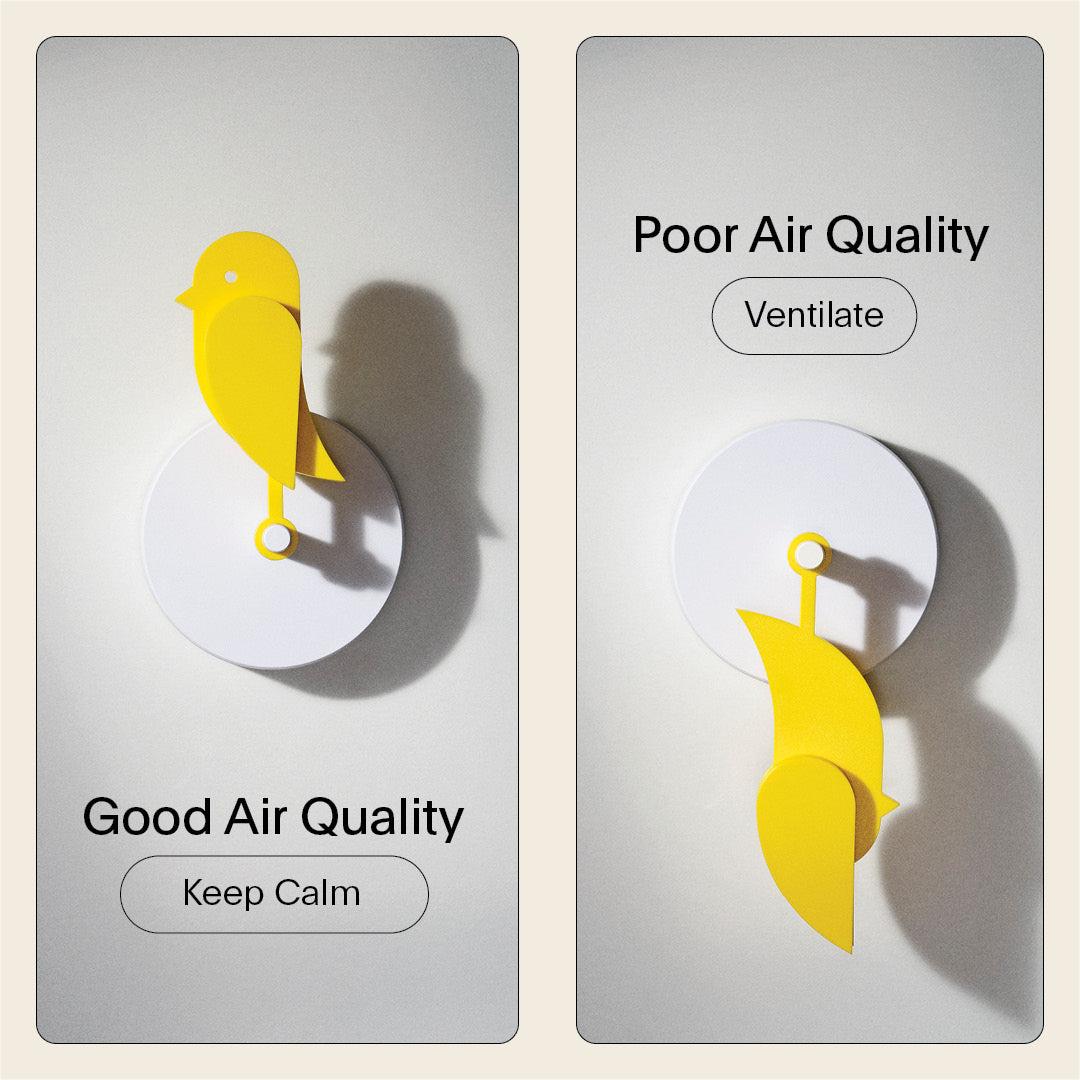
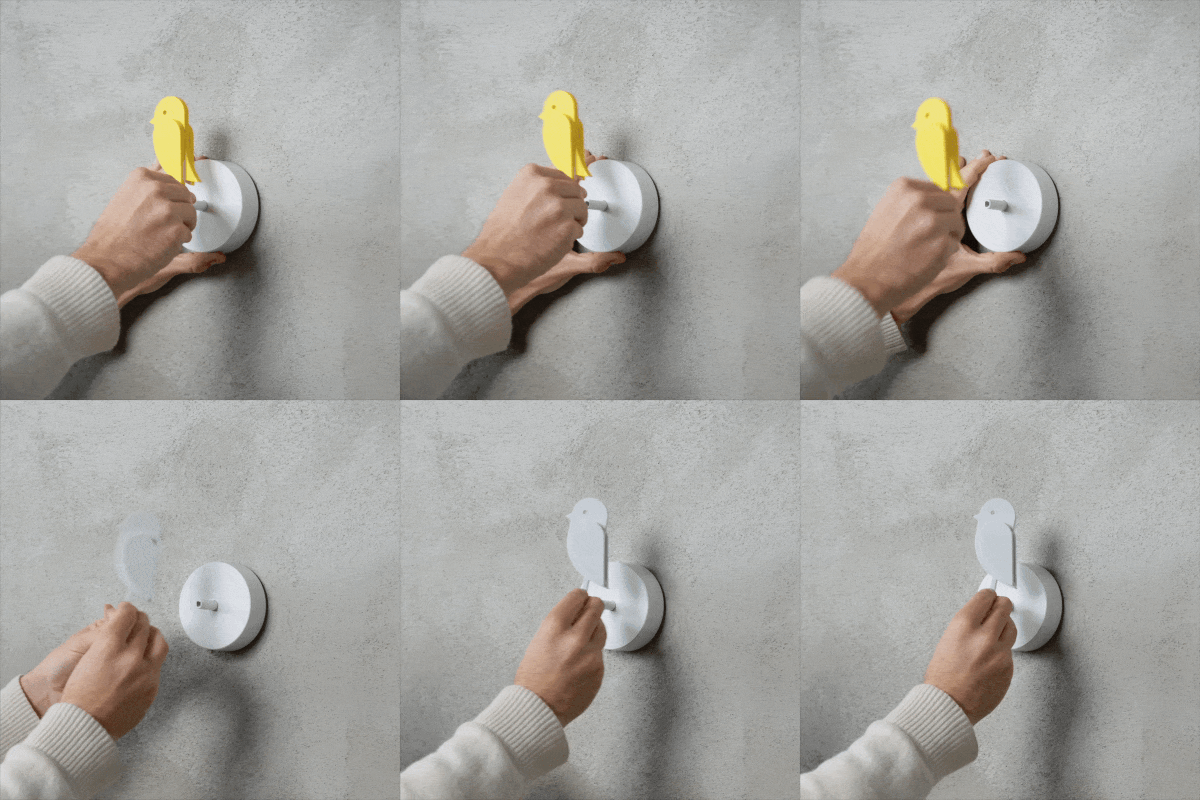
Unlike traditional devices that rely on graphs, apps, or numeric data, Birdie offers a new kind of simplicity in tracking your indoor climate. This home indoor air quality monitor is designed to give you instant, physical feedback you can see without needing to check a screen. When carbon dioxide levels rise too high, Birdie reacts by slumping, a clear visual signal that the air in your space is no longer optimal. As the air improves, Birdie rises again, making it easy to stay aware of your environment at a glance.
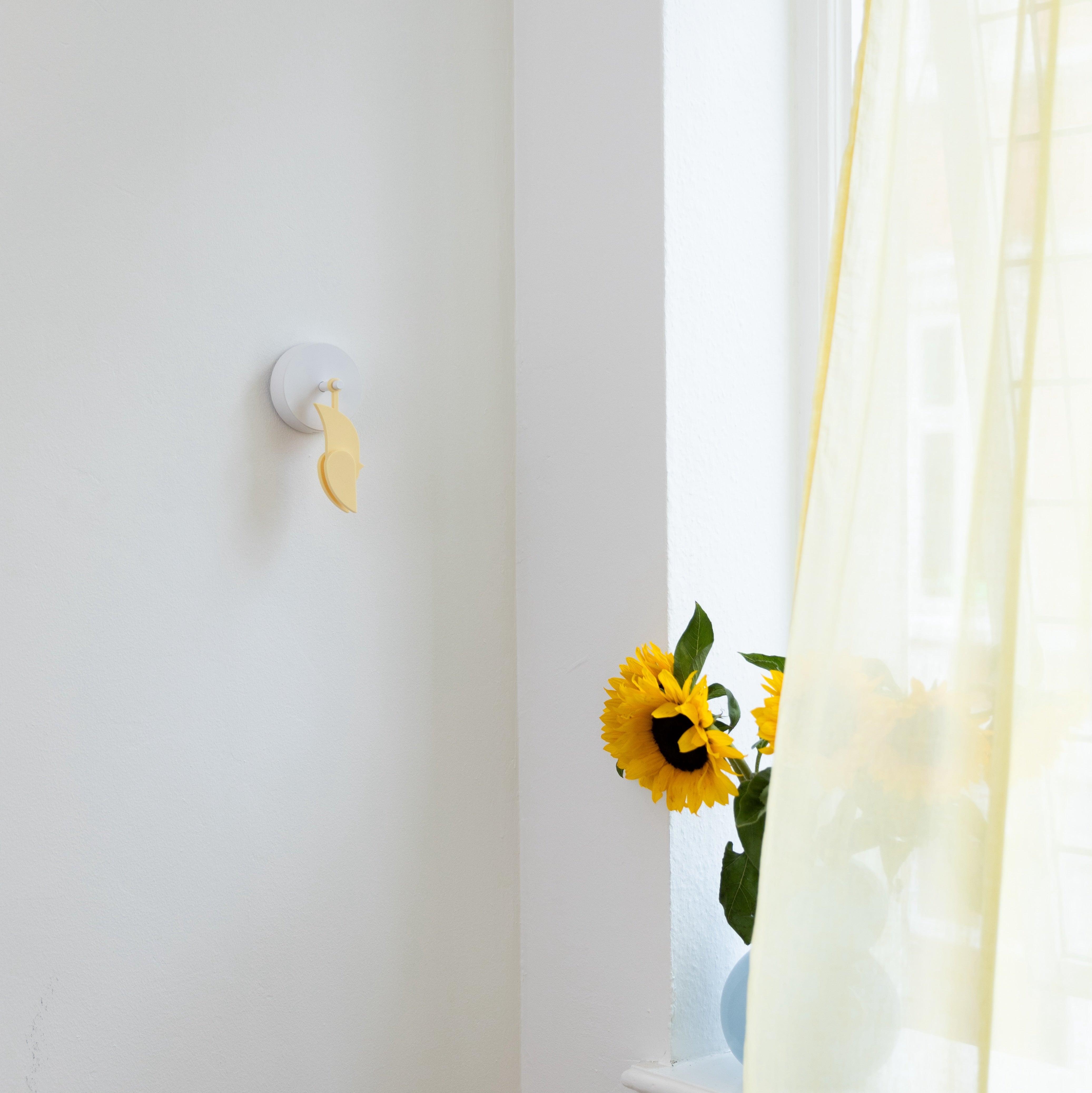
Birdie fits effortlessly into your routines and surroundings. It doesn’t beep or flash. It simply reflects your air quality in a quiet, intuitive way. This makes it ideal for bedrooms, children’s rooms, or any shared living space where peace of mind and healthy air go hand in hand.
Improving your indoor air isn’t just about comfort. It’s also about long-term health and wellbeing. If you're curious how cleaner air can impact your body and mood, explore our guide Clean air improves your health and wellbeing – seven simple steps.
How can I check or measure the air quality in my home?
Most traditional air quality monitors rely on digital sensors and display data through apps or on-device screens. These devices measure a range of variables like carbon dioxide, particulate matter (PM2.5), volatile organic compounds (VOCs), and humidity. To interpret the results, users often need to check numerical values, compare them to health thresholds, or analyze graphs. While this can provide in-depth insights, it also demands a certain level of technical understanding and engagement.
Birdie, by contrast, simplifies this process completely. It uses a high-quality CO₂ sensor to detect changes in your indoor air. Instead of presenting you with data, it responds physically. When air quality drops, Birdie drops. When it improves, it stands tall. This intuitive, visual feedback makes it easy to stay aware of your air without checking a screen. Birdie helps you react in real-time without needing to become an indoor climate expert.
Home indoor air quality monitor for better air and better sleep
Ventilating your bedroom for just 5–10 minutes before bedtime can make a big difference in how well you sleep. A short burst of fresh air helps reduce CO₂ levels, lower humidity, and create a more restful environment. Birdie acts as your silent reminder, helping you build healthy bedtime habits. By showing when air quality is poor — especially in the bedroom where we often sleep with closed windows — Birdie supports better sleep through better air, naturally and effortlessly.
Read more about how indoor air affects your sleep
Can indoor plants improve air quality?
Indoor plants can help bind dust and bring a sense of calm and freshness to your home. Certain species, like peace lilies and snake plants, are even known to filter specific airborne toxins in lab conditions. But when it comes to CO₂ - the gas that builds up when we breathe, sleep, cook, or work in closed rooms - plants fall short. They simply can’t replace the need for proper ventilation. Birdie offers a smarter alternative. As a home air quality monitor, it helps you stay informed in real time, so you know when it's time to open a window or adjust your habits not just rely on decoration.
Read more about plants and indoor air quality right here.
Frequently Asked Questions
How do air quality monitors work?
Air quality monitors typically use built-in sensors to measure elements like carbon dioxide (CO₂), humidity, and volatile organic compounds (VOCs). These values are then displayed as numbers or graphs on a screen or app. Birdie takes a different approach. It uses a precise CO₂ sensor to detect poor air quality and shows it physically. When CO₂ levels rise, Birdie slumps forward, offering immediate, intuitive feedback without the need for technical interpretation.
Are home air quality monitors accurate and are they worth it?
Yes, most modern home air quality monitors are highly accurate and provide reliable data that can help you detect poor air quality early before symptoms like headaches, fatigue, or poor sleep set in. Birdie is designed for daily life. It’s precise, hassle-free, and always visible in your home.
Can an air quality monitor detect mold?
Most air quality monitors don’t detect mold spores directly. However, they can measure the conditions that encourage mold growth such as high humidity, poor ventilation, and elevated CO₂ levels. Birdie helps you stay aware of those risk factors, so you can take action before mold becomes a visible problem. Maintaining good airflow and balanced humidity is key to mold prevention, and a monitor is a valuable part of that process.
How can I improve my home's indoor air quality?
Improving indoor air starts with proper ventilation. Regularly opening windows, using extractor fans in kitchens and bathrooms, and reducing sources of pollution like candles or synthetic cleaning agents can make a big difference. A home air quality monitor like Birdie supports these habits by letting you know when air quality drops so you’re not guessing. By staying informed and ventilating at the right time, you create a healthier and more comfortable environment.
Do indoor plants really improve air quality?
To some extent, yes. Certain plants can bind dust and may slightly affect VOC levels. But when it comes to carbon dioxide, which builds up naturally as we breathe, plants aren’t enough. They’re beautiful and calming, but they don’t replace proper ventilation or a reliable indoor air quality monitor.