

Written by Hans Augustenborg
August 28, 2024 — 7 min. read

Why talk about bedroom air quality?
Many people struggle with fatigue, headaches or poor sleep — but rarely consider that the problem might be right under their nose: the air. Poor air quality in the bedroom is often overlooked, even though it's the room where we spend the most continuous hours — often with closed windows and doors.
Without proper ventilation, CO₂ and humidity levels rise quickly during the night. This can lead to restless sleep, a heavy-headed feeling in the morning, and a generally lower energy level. And while sleep is supposed to be restorative, the air around us can actively disrupt its quality.
That’s why a healthy indoor climate in your bedroom isn’t just nice to have — it’s essential. In this guide, you’ll learn how air quality affects your sleep and what you can do to wake up clearer, calmer, and better rested.
Also read How to improve air quality in your home.
What happens to the air in a closed bedroom?
While you sleep, your body continuously releases CO₂. In a closed room with no ventilation, the concentration rises rapidly — especially if both door and window stay shut all night. As a result, many people start their day in air that no longer feels fresh. And that has physical as well as mental consequences.
High CO₂ levels during the night have been linked to lower sleep quality, morning headaches, and reduced concentration. It’s not always something you notice right away, but it can gradually affect your overall health and well-being.
A study from DTU showed that proper ventilation while sleeping directly improves cognitive performance the next day. Even moderate increases in CO₂ levels can reduce your ability to focus, think clearly, and retain new information — and the solution can be as simple as opening a window or improving airflow.
The Springer Handbook of Indoor Air Quality supports these findings, highlighting how poor bedroom air can disrupt sleep and lead to next-day fatigue. Sleep and air quality are closely connected — and nighttime is often when indoor air stagnates the most.
What Does Research Say About Sleep and Air Quality?
There’s growing scientific evidence that bedroom air quality has a direct impact on sleep. Multiple studies have shown that poor indoor air can lead to fragmented sleep, reduced REM sleep, and elevated physiological stress.
In a recent 2024 study published on ScienceDirect, high CO₂ levels in bedrooms were linked to lower sleep quality and impaired overnight recovery. Even moderate exceedances of recommended CO₂ limits can result in restless sleep and reduced vitality the next day.
Researchers affiliated with Taylor & Francis have also explored this connection, concluding that indoor climate plays a crucial role in sleep structure and duration. One key finding: poor air quality is closely linked to more frequent nighttime awakenings — especially affecting those with light or sensitive sleep patterns.
So, it's not just temperature, light, or your mattress that matters. CO₂ in the bedroom deserves just as much attention as blue light and caffeine when it comes to getting restful, restorative sleep.
Common signs of poor indoor air quality in the bedroom
Poor air quality in the bedroom is surprisingly easy to overlook — but your body senses it long before you consciously do.
Many people wake up feeling tired or with a headache, even after what should have been a “good night’s sleep.” This may be due to a buildup of CO₂ overnight, which can create a feeling of heaviness and reduce mental clarity.
As we sleep in a closed room, CO₂ concentration rises steadily with each exhalation. Once levels exceed 1,000 ppm — and in many bedrooms, it goes far beyond — the body begins to feel the strain.
Elevated CO₂ in the blood, known as hypercapnia, disrupts the body’s acid-base balance. CO₂ reacts with water in the blood to form carbonic acid (H₂CO₃), which lowers pH and causes mild acidosis. This triggers a range of physiological responses:
- Increased breathing rate, which can disturb deep sleep stages
- Raised heart rate and sympathetic nervous system activity, activating the stress response
- Reduced oxygen availability in tissues due to decreased hemoglobin affinity (the Bohr effect)
- Stimulation of the hypothalamus and autonomic nervous system, further disturbing sleep architecture
All of this leads to fragmented sleep, less effective recovery, reduced REM sleep, and mental fatigue the next day. You wake up without having truly recharged.
Other warning signs include foggy windows, condensation around the frames, or a stuffy feeling in the room — even shortly after airing out. These are all indicators that your bedroom isn’t ventilating enough to maintain healthy air quality throughout the night.
And when the air doesn’t move, neither does your body — at least not in the way it should.
Airing out before bed – Does it actually work?
Yes — more than you might think. A quick 5–10 minute airing right before bedtime can significantly reduce CO₂ levels in the bedroom. It replaces stale air with fresh oxygen, giving your body better conditions for falling asleep and recovering during the night.
It’s not about sleeping in a draft or shivering under the covers — it’s about exchanging used air for fresh air, lowering humidity and CO₂ to healthier levels. You can easily air out the room and then close the window again before going to bed. The key is to get the air moving.
Want more practical tips? Check out our guide 5 Simple Tips for Better Ventilation and Indoor Air Quality
A bird that shows you the air you breathe
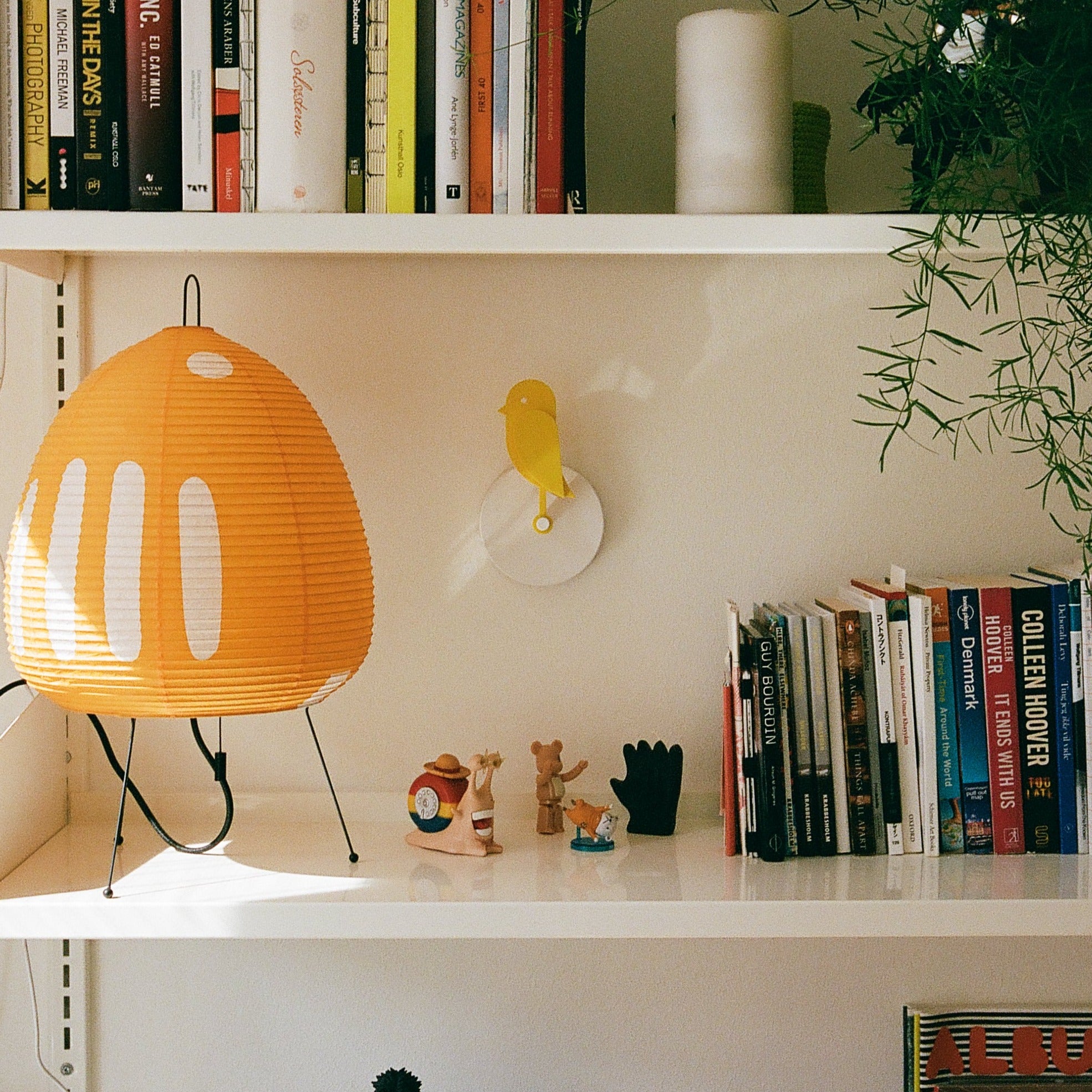
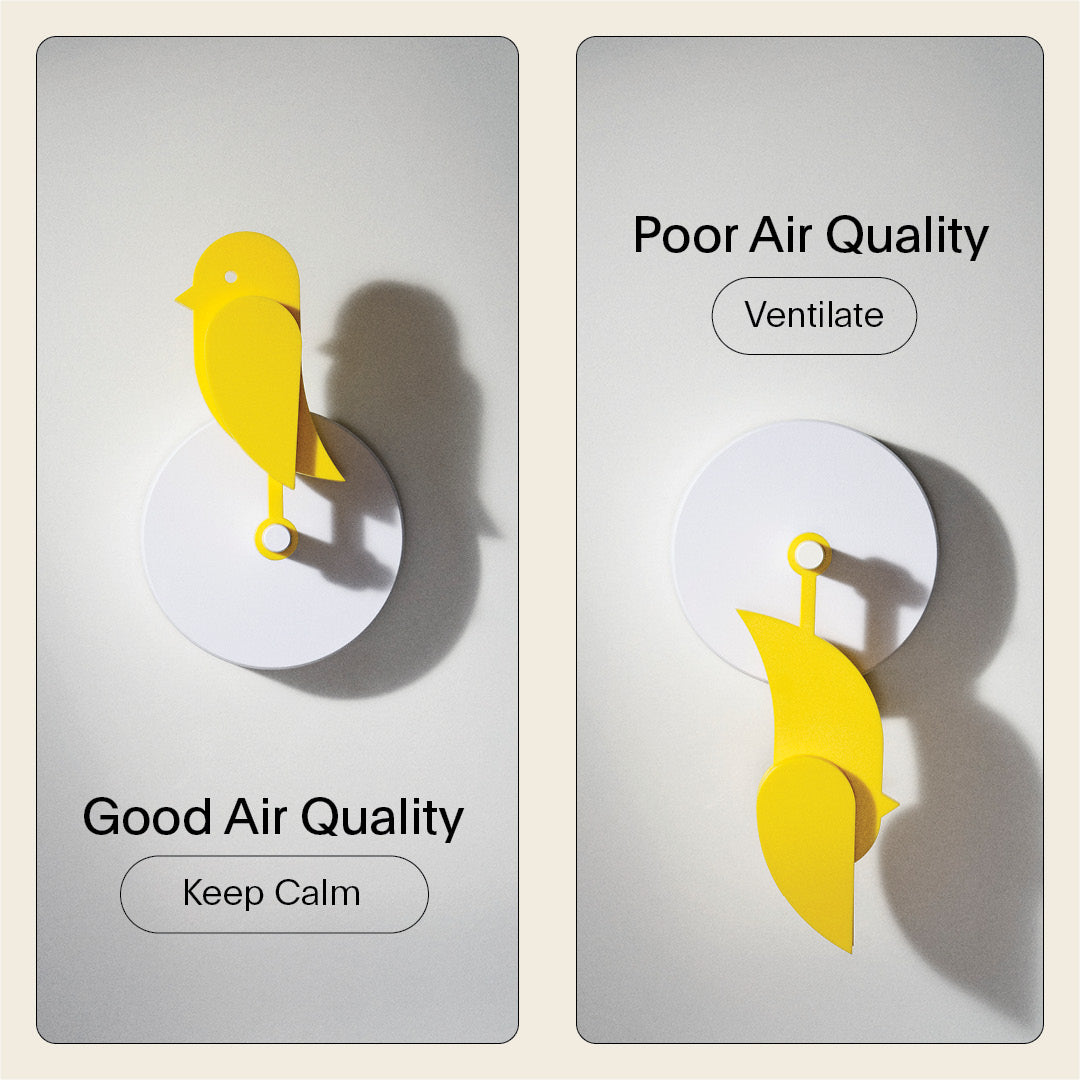
It’s not always easy to know what the air in your bedroom is really like. Most of us only notice the effects — tiredness, headaches, poor sleep — when it’s already too late. Birdie makes it visible before it impacts your well-being.
When CO₂ levels in the bedroom get too high, Birdie responds physically: it collapses, wings drooping. Once the air is fresh again, it stands upright. It’s a simple, visual signal — no numbers to interpret, no graphs to read, no app to open.
Birdie turns the invisible into something you can see. It helps you catch poor air quality before it disrupts your sleep or drains your energy. No tech skills required — just keep an eye on the bird.
Designed to blend into your home, Birdie is both functional and aesthetic. Go with Birdie Yellow for a pop of color, or choose Birdie Wood Edition for a more natural, subtle look.
What about bedroom plants?
Many people turn to air-purifying plants as a natural way to improve indoor air quality — and that includes the bedroom. While houseplants can have a positive effect, they’re no substitute for proper ventilation.
Plants like peace lilies, snake plants, or aloe vera can help trap dust and bring a sense of freshness to the room. But the CO₂ concentration will still rise during the night in a closed space, and plants simply can’t compensate for the level of air exchange your body needs while you sleep.
So think of bedroom plants as a helpful supplement to good ventilation habits — not a standalone solution. They can add a calming touch and improve the atmosphere, but they won’t solve the problem of stale or oxygen-poor air.
How to build a better sleep routine with fresh air
A good night’s sleep begins long before your head hits the pillow. By making fresh air part of your bedtime routine, you can improve both your indoor climate and your sleep quality.
Ventilate your bedroom for 5–10 minutes just before going to bed. A short burst of fresh air can significantly lower the CO₂ level in the room without making it uncomfortably cold - simply close the window again as you go to sleep. The fresh air helps your body relax and promotes deeper rest.
Your home’s sleep environment plays a bigger role than many people think. Poor air quality, high temperatures, or a lack of ventilation can all affect how well you sleep. Danish housing expert Bolius has compiled key insights on how your home’s indoor climate impacts sleep - from air and noise to light and room layout.